Giving Tuesday: Promoting Scholarship and Building Bridges in a Virtual World

giving_2020_dec

Dear Friends of IQSA,

For over seven years the International Qur’anic Studies Association has made fostering Qur’anic scholarship its mission. The Qur’an is an integral part of world literature, and it has shaped and continues to shape the world in which we live. IQSA is mindful of its members, partners, and friends during this difficult time, and we want to reach out to those among you who can afford to support IQSA when the organization needs it most at a time when our operational costs remain high despite cutting back on operations themselves. By giving to IQSA as you are able, you are promoting high quality scholarship and building bridges across the globe, which in turn has positive ripple effects on high quality education, journalism, publishing and public engagement.

IQSA is the only non-profit learned society exclusively dedicated to convening regular Qur’an conferences in North America and in Muslim majority countries around the world, as well as to publishing rigorous cutting edge scholarship on the Qur’an. Within seven short years IQSA has convened eleven major conferences. These have included large scale conferences in throughout major US cities, Carthage, Palermo, Tunisia and Jogjakarta, Indonesia, as well as co-sponsored panels in Berlin, Germany and St. Andrews, Scotland. IQSA conferences showcase cutting edge research on manuscripts, historical documents, and high tech digital resources, as well as debate critical issues including methodology, hermeneutics and gender. This is possible because IQSA members include the very best scholars in the field.

The fourth issue of the bilingual Journal of the International Qur’anic Studies Association (JIQSA) was released this year, and IQSA’s publications in the Studies in the Qur’ān series are now available from ISD. In addition, IQSA now sponsors free weekly online seminars through Zoom to bring scholars and students of the Qur’an together at a time when many are in social isolation in conjunction with the University of Notre Dame. IQSA members receive free access to JIQSA, the Review of Qur’an Research (RQR), the exclusive member directory (including world renowned Qur’an specialists), and PhD students and recent graduates gain valuable professional development experience. Lifetime and Institutional members carry additional member benefits. IQSA also rewards junior scholars and international academics with the opportunity to learn from colleagues around the world and publish their research. By giving, you help IQSA keep membership dues low and you reward those members of our community who need it most.

It goes without saying that the current political climate has made our task — especially critical scholarship and building bridges — more important than ever. As academics, professionals and philanthropists we have a duty to support the Humanities and Social Sciences at a time when they are under threat. This also means we have the opportunity to bring about a much more intellectual discussion of the Qur’an when the public needs it most.

IQSA was founded by a generous grant from the Henry Luce Foundation, and is now funded through the generous support of its members, partners and friends. Please take time this #GivingTuesday to DONATE NOW to further IQSA’s mission across the globe.

Most gratefully,

Emran El-Badawi, Executive Director
International Qur’anic Studies Association
http://www.iqsaweb.org | contact@iqsaweb.org

Prepare for the 2020 IQSA Virtual Annual Meeting!

The 2020 IQSA Annual Meeting held for the first time in a new virtual format is just 10 days away! Please see below for some friendly reminders for participants and attendees as you prepare to attend.

Membership & Registration
Current IQSA membership is required and verified by staff upon registration for the IQSA Annual Meeting. However, SBL/AAR membership is not required to attend the IQSA Annual Meeting. You can renew your IQSA membership HERE.

To register for this year’s meeting, visit the SBL Annual Meeting Page and choose Register for the Annual Meeting. Then, complete a New Registration under the Affiliate Members category, and choose International Qur’anic Studies Association when prompted.

Dates and Times
The virtual meeting schedule is extended to avoid potential timing conflicts, time zone limitations, and religious and Thanksgiving holidays. The meeting will take place Monday – Thursday over two weeks. The new dates are November 30 – December 3 and December 7 – 10, from 9AM to 9PM EST. All times on the conference schedule are listed in Eastern Standard Time (UTC-5).

Program Platform
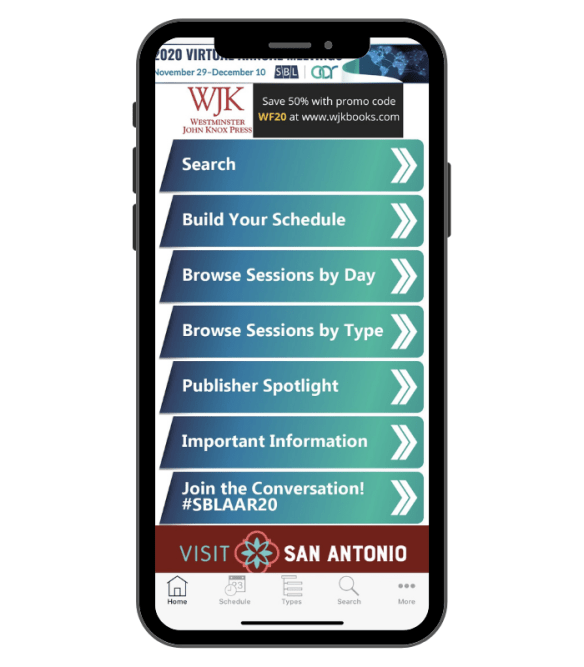
The SBL and AAR Virtual Annual Meetings Platform is now live on your computer! You can search and browse all of the sessions and publishers who are participating. After you log in, you can start to build your own schedule. Much more functionality will be unveiled once the Virtual Annual Meeting starts!   To log into the Virtual Annual Meetings Platform, you will use your registration Reference Number as your username, and your last name as your password.   Download the Mobile App to access the Virtual Annual Meeting on your mobile device!  

Screen Shot 2020-10-26 at 11.06.10 AM


IQSA Virtual Events
IQSA will still hold its Annual President Address, Business and General Meetings, Graduate Student Roundtable, and a closing session. To participate, members must be registered for the Annual Meeting through SBL/AAR.  

Presidential Address
11/30/2020
1:00 PM to 2:00 PM
Asma Hilali, University of Lille, Panelist (40 min)
Fred Donner, University of Chicago, Respondent (20 min)  

Business Meeting
12/02/2020
10:00 AM to 11:00 AM
*Members Only

General Meeting
12/02/2020
11:30 AM to 12:30 PM
Open to Public

Graduate Student Roundtable
12/03/2020
11:00 AM to 12:00 PM

Closing Session
12/10/2020
1:00 PM to 1:30 PM  

Questions or concerns? For registration and logistics, email information@annual-meetings.org. For IQSA specific questions, email contactus@iqsaweb.org. We look forward to seeing our members and affiliates next month for this exciting event!    

© International Qur’anic Studies Association, 2020. All rights reserved.  

IQSA Call for Nominations

LetterheadDear IQSA members, affiliates, and friends,

I am writing as the chair of the nominating committee in order to solicit recommendations for suitable persons for leadership positions within IQSA.

It is with great pleasure that I can report that over the past years, based on your recommendations and those of the nominations committee,  IQSA has made great steps towards implementing our essential goal of ensuring diversity regarding gender, culture, geographical location and status. We are continuously working in this direction looking for people who are (or are willing to be) actively involved in IQSA works.

It is in light of these considerations that I would like you to submit your recommendations for leadership positions for IQSA (alba.fedeli@uni-hamburg.de) by November 30, 2020. Among this year’s positions are president elect and chair of nominating committee. Your suggestions will be treated with utmost discretion and remain anonymous. You can simply suggest names, or perhaps add a few words what motivates your suggestions!

A hybrid slate election will follow this Call for Nominations from November 30—December 10, 2020. All active IQSA members will receive instructions on participating in the coming weeks. Inactive IQSA members can renew lapsed membership at this link. 

Thank you for helping to advance IQSA’s mission through your continued support! 

Kind regards,

Alba Fedeli
Universität Hamburg
Chair, IQSA Nominations


IQSA Virtual Annual Meeting: Reminders and Updates

The 2020 IQSA Annual Meeting held for the first time in a new virtual format is just a few short weeks away! Please see below for some friendly reminders for participants and attendees:

Membership & Registration
Current IQSA membership is required and verified by staff upon registration for the IQSA Annual Meeting. However, SBL/AAR membership is not required to attend the IQSA Annual Meeting. You can renew your IQSA membership HERE.

To register for this year’s meeting, visit the SBL Annual Meeting Page and choose Register for the Annual Meeting. Then, complete a New Registration under the Affiliate Members category, and choose International Qur’anic Studies Association when prompted.

Dates and Times
The virtual meeting schedule will be extended to avoid potential timing conflicts, time zone limitations, and religious and Thanksgiving holidays. The meeting will take place Monday – Thursday over two weeks. The new dates are November 30 – December 3 and December 7 – 10, from 9AM to 9PM EST / 1PM to 1AM ECT. All times on the conference schedule are listed in Eastern Standard Time (UTC-5).

Program Platform
The SBL and AAR Virtual Annual Meetings Platform is now live on your computer!

You can search and browse all of the sessions and publishers who are participating. After you log in, you can start to build your own schedule. Much more functionality will be unveiled once the Virtual Annual Meeting starts!
To log into the Virtual Annual Meetings Platform, you will use your registration Reference Number as your username, and your last name as your password.

Download the Mobile App to access the Virtual Annual Meeting on your mobile device!

Screen Shot 2020-10-26 at 11.06.10 AM

IQSA Virtual Events
IQSA will still hold its Annual President Address, Business and General Meetings, Graduate Student Roundtable, and a closing session. To participate, members must be registered for the Annual Meeting through SBL/AAR.
Presidential Address
11/30/2020
1:00 PM to 2:00 PM
Asma Hilali, University of Lille, Panelist (40 min)
Fred Donner, University of Chicago, Respondent (20 min)
Business Meeting
12/02/2020
10:00 AM to 11:00 AM
*Members Only
General Meeting
12/02/2020
11:30 AM to 12:30 PM
Open to Public

Graduate Student Roundtable
12/03/2020
11:00 AM to 12:00 PM

Closing Session
12/10/2020
1:00 PM to 1:30 PM
Questions or concerns? Email contactus@iqsaweb.org. We look forward to seeing our members and affiliates next month for this exciting event!
© International Qur’anic Studies Association, 2020. All rights reserved.

IQSA Contact Information Update

Attention IQSA Members, Friends, and Affiliates,

The International Qur’anic Studies Association has migrated its main point of contact via email to a new address. For inquiries about membership, meetings, resources, advertising, or any other topic, please email contactus@iqsaweb.org and allow for 2-3 business days for the IQSA team to respond.

We look forward to continuing to foster Qur’anic Studies around the globe with this communications update and invite you to become a part of the IQSA community or renew your membership at members.iqsaweb.org!

emailbounce

Reminder: IQSA 2020 Virtual Annual Meeting

AM2020_BANNER_virtualWhile Covid-19 and health restrictions have changed the format of IQSA’s Annual Meeting in conjunction with SBL/AAR, the meeting itself is still scheduled for November in a new and exciting format expanding its reach to scholars worldwide!

Registration is open for the first ever virtual IQSA Annual Meeting held in conjunction with the SBL/AAR Annual Meetings. You can save on the registration fees by joining IQSA and registering for the Annual Meetings as an Affiliate Member HERE. To become an IQSA member click HERE.

For more information about the transition to a virtual program, please see the IQSA Policy Update and SBL Announcement. In addition, find FAQ’s about this year’s meeting below. We hope you’ll join us and meet us in virtually for a new and exciting program!


ANNUAL MEETING FAQs

Q: How do I register for the IQSA Annual Meeting?
A: 
To register for this year’s meeting, visit the SBL Annual Meeting Page and choose Register for the Annual Meeting. Then, complete a New Registration under the Affiliate Members category, and choose International Qur’anic Studies Association when prompted.

Q: What are the dates of IQSA’s Annual Meeting?
*The virtual meeting schedule will be extended to avoid potential timing conflicts, time zone limitations, and religious and Thanksgiving holidays. The meeting will take place Monday – Thursday over two weeks. The new dates are November 30 – December 3 and December 7 – 10, from 9AM to 9PM EST / 1PM to 1AM ECT.

Q: Do I have to be an IQSA member to register for the Annual Meeting?
A: 
YES – current IQSA membership is required and verified by staff upon registration. However, SBL/AAR membership is not required to attend the IQSA Annual Meeting. You can renew your IQSA membership HERE.

Q: I already registered for the Annual Meeting as an SBL/AAR member. Do I have to register again as an affiliate to attend IQSA events?
A: 
No – duplicate registration is not required to attend IQSA events if one has already registered as an SBL/AAR member. However, you must register as an active IQSA member if you are presenting at an IQSA session.

Q: Where can I find a schedule of events for the Annual Meeting?
A: 
IQSA  and SBL/AAR’s Program Book will be distributed online as the meeting date draws closer. Members can chose to access the Program Book via mobile app or online  while completing the registration process.

Q: Does IQSA provide funding or reimbursement for its members to attend the meeting?
A: 
At this time, IQSA does not have the resources to provide financial assistance for Annual Meeting registration costs. However, IQSA encourages its members to seek financial aid through institutional grants and other funding.

VIRTUAL MEETING FAQS

Q: I’ve registered and I can’t attend the Annual Meeting, can I get a refund for my registration fee?
A:
In order to receive 100% registration refund, all registration cancellations must be requested in writing (email) by October 21, 2020. After October 21, only cancellations for medical reasons, accompanied by documentation from a physician or medical facility, will be refunded.

Please send meeting cancellation requests to information@annual-meetings.org.  Registrations or workshops cannot be switched to another person’s name. Proof of payment may be required.

Q: If I had already registered for the live Annual Meetings, what do I need to do to register for the online Annual Meetings?
A:
In a word, nothing. Your registration will automatically be good for the virtual meeting. If you wish to cancel your registration, you may do so without any cancellation fee through 21 October.

Q: I booked a hotel room when I registered for the Annual Meetings. What do I need to do?
A: If you reserved a hotel room in during your conference registration, your hotel reservation has already been cancelled; there is nothing you need to do at this time. If you booked a hotel independently (i.e., not as a part of your conference registration), you will need to cancel on your own.

Q: What is included in my registration fee?
A: The registration fee for the conference will be the same as the early-bird rate ($225 for affiliates). The registration fee helps to cover the substantial costs that come with producing a conference of this size, even a virtual one.


© International Qur’anic Studies Association, 2020. All rights reserved

JIQSA Volume 4 (2019) Now Available!

IQSA is proud to announce the official release of the Journal of the International Qur’anic Studies Association V.4 2019 (Lockwood Press) edited by Nicolai Sinai (Oxford University).

JIQSA4_COVER

Volume four is available to IQSA members for FREE online via the member login on members.iqsaweb.org. Non-members can receive access by signing up for membership HERE.

Institutions wishing to subscribe for print and/or online access should fill out the form HERE. To request that your institutional library subscribe to JIQSA, please present this form. Print subscriptions are also available for individual subscribers via THIS FORM.

ISSN 2474-8390 (Print)
2474-8420 (Online)

Subscription Rates:
Print and Online: US$70
Print only: US$40
Online only: US$40

JSTOR
JIQSA is now accessible through the online academic digital library JSTOR. Libraries and other institutions with a subscription to JSTOR can access JIQSA HERE.

Member Access

Full online access to the Journal of the International Qur’anic Studies Association is available by signing in to the member portal at iqsaweb.org HERE. Use the top menu to navigate to “JIQSA” and select the desired volume via the drop-down menu. Online access to JIQSA is NOT  available via Lockwood Press’ website.

If you experience trouble logging in, please email contact@iqsaweb.org to reset your password or confirm your membership.

Renew or sign up for IQSA membership HERE for full access to JIQSA, RQR, and more!

Table of Contents (Vol. 4, 2019)

  1. Farrin, Raymond K. “The Verse Numbering Systems of the Qurʾān: A Statistical and Literary Comparison.” JIQSA 4 (2019): 3-58.
  2. Tlili, Sarra. “Fa’ṣdaʿ bi-mā tuʾmar: A Motif-Based Study of Sūrat al-Ḥijr.” JIQSA 4 (2019): 59-84.
  3. Melchert, Christopher. “The Controversy over Reciting the Qurʾān with Tones (al‑qirāʾah bi’l‑alḥān).” JIQSA 4 (2019): 85-110.
  4. Christiansen, Johanne Louise. ““Their Prayer at the House Is Nothing but Whistling and Clapping of Hands” (Q al-Anfāl 8:35): Negotiating Processions in the Qurʾān.” JIQSA 4 (2019): 111-140.
  5. Rashwani, Samer. “Review Essay: Al-Ḥākim al-Jishumī and the History and Study of Muʿtazilī Exegesis.” JIQSA 4 (2019): 141-154.

The journal’s website, including additional information and contact details, can be found at http://lockwoodonlinejournals.com/index.php/jiqsa. For more information on theInternational Qur’anic Studies Association, please visit www.iqsaweb.org.


© International Qur’anic Studies Association, 2020. All rights reserved.

Giving Tuesday 2020: Promoting Scholarship and Building Bridges

Event-Banner-Tuesday-2020Dear Friends of IQSA,

For over seven years the International Qur’anic Studies Association has made fostering Qur’anic scholarship its mission. The Qur’an is an integral part of world literature, and it has shaped and continues to shape the world in which we live. IQSA is mindful of its members, partners, and friends during this difficult time, and we want to reach out to those among you who can afford to support IQSA when the organization needs it most at a time when our operational costs remain high despite cutting back on operations themselves. By giving to IQSA as you are able, you are promoting high quality scholarship and building bridges across the globe, which in turn has positive ripple effects on high quality education, journalism, publishing and public engagement.

IQSA is the only non-profit learned society exclusively dedicated to convening regular Qur’an conferences in North America and in Muslim majority countries around the world, as well as to publishing rigorous cutting edge scholarship on the Qur’an. Within seven short years IQSA has convened eleven major conferences. These have included large scale conferences in throughout major US cities, Carthage, Palermo, Tunisia and Jogjakarta, Indonesia, as well as co-sponsored panels in Berlin, Germany and St. Andrews, Scotland. IQSA conferences showcase cutting edge research on manuscripts, historical documents, and high tech digital resources, as well as debate critical issues including methodology, hermeneutics and gender. This is possible because IQSA members include the very best scholars in the field.

The fourth issue of the bilingual Journal of the International Qur’anic Studies Association (JIQSA) will be released this year, and IQSA’s publications in the Studies in the Qur’ān series are now available from ISD. In addition, IQSA now sponsors free weekly online seminars through Zoom to bring scholars and students of the Qur’an together at a time when many are in social isolation in conjunction with the University of Notre Dame. IQSA members receive free access to JIQSA, the Review of Qur’an Research (RQR), the exclusive member directory (including world renowned Qur’an specialists), and PhD students and recent graduates gain valuable professional development experience. Lifetime and Institutional members carry additional member benefits. IQSA also rewards junior scholars and international academics with the opportunity to learn from colleagues around the world and publish their research. By giving, you help IQSA keep membership dues low and you reward those members of our community who need it most.

It goes without saying that the current political climate has made our task — especially critical scholarship and building bridges — more important than ever. As academics, professionals and philanthropists we have a duty to support the Humanities and Social Sciences at a time when they are under threat. This also means we have the opportunity to bring about a much more intellectual discussion of the Qur’an when the public needs it most.

IQSA was founded by a generous grant from the Henry Luce Foundation, and is now funded through the generous support of its members, partners and friends. Please take time this #GivingTuesday to DONATE NOW to further IQSA’s mission across the globe.

Most gratefully,

Emran El-Badawi, Executive Director
International Qur’anic Studies Association
http://www.iqsaweb.org | contact@iqsaweb.org

Call for Papers: IQSA Annual Meeting 2020

AM2020_BANNER

The International Qur’anic Studies Association has opened its call for papers for its Annual Meeting to be held in Boston, Massachusetts from November 20–23, 2020. Paper proposals should be submitted through the SBL’s automated online submission system under the corresponding “Affiliates” link by March 11, 2019 (note: IQSA membership is required for proposal submission; see below). Submission links can be found below under the respective program units. If you require further information or experience difficulties with the submission process, please contact the chairs of the program unit to which you would like to apply.

Please note that all proposals must include:

  • Author name and affiliation
  • Paper title
  • 400 word paper abstract (written in English)

Eligibility for proposal submissions is contingent upon the following:

  • Active IQSA membership is required at the time of proposal submission for the IQSA Program, and the membership status of all applicants will be checked prior to acceptance
  • Participants must maintain current IQSA Membership through their participation in the Annual Meeting

Please also note that:

  • To ensure equity and diversity amongst participants, participants should submit only one paper presentation per IQSA Annual Meeting
  • All participants must adhere to IQSA’s Professional Conduct Policy
  • Participants will be required to register for the conference by submitting payment through SBL’s online submission system (users are strongly encouraged to take advantage of the “Super Saver” rates which end mid-May)

Please email contact@iqsaweb.org with questions or concerns. We look forward to seeing you in Boston!


The Annual Meeting includes panels for each of IQSA’s eight program units:

Linguistic, Literary, and Thematic Perspectives on the Qur’anic Corpus
The Societal Qur’an

The Qur’an and the Biblical Tradition
The Qur’an: Manuscripts and Textual Criticism
The Qur’an: Surah Studies
The Qur’an and Late Antiquity
Qur’anic Studies: Methodology and Hermeneutics
Qur’anic Exegesis: Unpublished and Recently Published tafsīr Studies

PROGRAM UNIT 1
Linguistic, Literary, and Thematic Perspectives on the Qur’anic Corpus

Program Unit Chairs
Anne-Sylvie Boisliveau
Mohsen Goudarzi

For the 2020 meeting in Boston, the Linguistic, Literary, and Thematic Perspectives on the Qur’anic Corpus Unit invites papers to an open session on any topic that engages linguistic, literary, or thematic features of the Qur’an.

PROGRAM UNIT 2
Societal Qur’an

Program Unit Chairs
Johanna Pink
Thomas Hoffmann

The Societal Qur’an unit invites proposals for papers that investigate the Qur’an in its lived and societal contexts throughout history, from Late Antiquity to contemporary Late Modernity. Proposals are encouraged that engage with sociological, anthropological, and political science theories and methods in their pursuit of the societal and lived Qur’an. Papers might, for instance, discuss topics such as ritual and artistic uses of the Qur’an, practices of teaching the Qur’an, talismanic and medical uses of the Qur’an, the production of manuscript, print, and new media versions of the Qur’an, or the deployment of the Qur’an in terms of social identity and political organization.

PROGRAM UNIT 3
The Qur’an and the Biblical Tradition

Program Unit Chairs
Nora Schmid
Holger Zellentin

The focus of this unit is the Qur’an’s relationship to the Biblical tradition in the broadest sense: the books of the Hebrew Bible and the New Testament in the various languages of their original composition and later translations (regardless of a particular book’s status of canonization within specific Jewish or Christian groups), as well as the exegetical, homiletic, and narrative traditions of the Bible in written or oral form. For the 2020 meeting in Boston, the Qur’an and the Biblical Tradition unit welcomes proposals that engage any aspect of the relationship between the Bible and the Qur’an.

PROGRAM UNIT 4
The Qur’an: Manuscripts and Textual Criticism

Program Unit Chairs
Alba Fedeli
Shady Nasser

The aim of the Qur’an: Manuscripts and Textual Criticism unit is to provide a cross-disciplinary setting for the exploration of the various interconnected issues that arise when questions concerning the Qur’an’s text are investigated through the prism of its manuscript tradition. This latter term encompasses the field of Qur’an manuscripts per se, but also alludes to such information regarding the history of the text that can be gleaned from the citations, marginal notes, and detailed analysis provided in other branches of the Islamic sciences, for example Qur’an commentaries and the qira’at literature. It is hoped that bringing together scholars from a variety of disciplines will serve to enrich and strengthen each of these fields. The Manuscripts and Textual Criticism unit seeks to create a forum for the application of textual criticism to the Qur’anic text attested both in physical manuscripts and within the wider Islamic tradition. It also aims to investigate palaeographic, codicological, and art historical features in the Qur’an’s manuscript tradition.

For the 2022 meeting in Boston, the unit welcomes papers on any topic within the range of the interests of the Manuscripts and Textual Criticism program unit.

PROGRAM UNIT 5
The Qur’an: Surah Studies

Program Unit Chairs
Nevin Reda
Shawkat Toorawa

The Surah Studies Unit invites proposals for individual papers on any aspect of Surat al-An‘am (6, ‘Livestock’), which has attracted little attention in Western scholarship.  One of the seven long ones (al-sab‘ al-tiwal), it is a polythematic Meccan surah of 165 verses. Proposals might explore: material relating to Abraham or to Moses; engagement with Biblical laws or the Decalogue; its devotional uses, especially in Shiite liturgy; its important passages on dietary law; its polemic and critique of pagan rituals; its legal minimalism; rhyme and acoustics; depictions of non-human animals; its architecture and traces of compositional procedures; its affinities with Medinan surahs; or much else besides. The Surah Studies Unit encourages and welcomes diverse methods and approaches. The raison d’etre of the Unit is to bring different perspectives on a given sura into dialogue with one another.

PROGRAM UNIT 6
The Qur’an and Late Antiquity

Program Unit Chairs
Michael Pregill
Johanne Christiansen

The Qur’an and Late Antiquity program unit invites proposals that utilize various types of material or evidence—be that literary, documentary, or epigraphic—to illuminate the historical context in which the Qur’an was revealed and the early Islamic polity emerged. We are especially interested in papers that present and discuss comparative methodologies to contribute to a better understanding of the Qur’an’s place in the cultural, political, social, and religious environment of Late Antiquity.

Additionally, for the 2020 Annual Meeting in Boston, we seek proposals for a themed session considering the state of the field on the Jews in the prophetic milieu and early Islam.

PROGRAM UNIT 7
Qur’anic Studies: Methodology and Hermeneutics

Program Unit Chairs
Khalil Andani
Karen Bauer

This unit aims to understand and contextualize the methods and hermeneutics applied to the Qur’anic text, both historical and contemporary. The Methodology and Hermeneutics unit addresses questions that might implicitly govern other units, such as: What is Qur’anic Studies, and how does the study of the Qur’an differ from the study of its interpretation? What are the methodological differences between descriptive and normative approaches to the text? How does context (intellectual, social, ethical, historical) affect hermeneutical approaches to the text? The unit welcomes papers addressed to the hermeneutics and methods of particular schools of interpretation or thought, and also on hermeneutics as applied to specific subjects or concepts such as social justice and gender.

This year the Methodology and Hermeneutics unit will feature a pre-arranged panel that surveys Muslim engagements with the Qur’an from the classical and post-classical periods that focus on different visions of the Qur’an as a revelatory discourse and its major themes.

The Unit also invites submissions for a second panel on any aspect of Qur’anic interpretation, hermeneutics, and methodology. Proposals can focus on, among other topics, the following areas:

  • The overlaps and distinctions between tafsīr and ta’wīl in exoteric and esoteric Qur’an commentary literature as they have evolved historically;
  • The distinctive hermeneutical features of Qur’anic exegesis performed by minority Muslim communities including Sufi and Shi‘i (Twelver, Ismaili, Nusayri) commentators;
  • How the Muslim Peripatetics (falasifa), such as Avicenna, have engaged with the Qur’an through Aristotelian and Neoplatonic lenses;
  • The unique hermeneutical approaches of Muslim modernist thinkers in the 19th and 20th centuries;
  • Interpretative engagements with the Qur’an from thinkers in South Asia and Southeastern Asia.

Any other topic that deals with Qur’anic hermeneutics is welcome.

PROGRAM UNIT 8
Qur’anic Exegesis: Unpublished and Recently Published tafsīr Studies

Program Unit Chair
Shady Nasser

This exploratory panel is dedicated to exploring Qurʾānic exegetical works (tafsīr proper or otherwise) that were recently published or still in manuscript form. The goal of the panel is to shed light on these works of tafsīr that have not got enough scholarly attention, and which fall outside the “familiar” canon of Muslim exegetical works often used in modern scholarship. This panel encourages scholars to consult and study these recent publications in order to enrich our understanding of Qurʾānic exegesis and widen our perspectives with a more holistic and comprehensive view of tafsīr studies that fall outside the traditional sources often used.

For the 2020 annual meeting, the unit welcomes papers on any topic within the range of the interests of unpublished and recently published tafsīr works.


© International Qur’anic Studies Association, 2020. All rights reserved

Review of Qur’anic Research, Vol. 6 no. 1 (2020)

pageHeaderLogoImage_en_US

In the latest installment of the Review of Qur’anic Research (vol. 6, no.1), Naomi Koltun-Fromm (Haverford College) reviews Robert C. Gregg’s Shared Stories, Rival Tellings: Early Encounters of Jews, Christians, and Muslims (Oxford and New York: Oxford University Press, 2015). 

GreggIn her review, Koltun-Fromm writes “In this rather hefty tome, Robert Gregg sets out to share with us the myriad ways the Bible and biblical lore has been read over the centuries across multiple cultural, linguistic, and religious contexts. This book’s comparative yet innovative nature opens up new avenues for looking at this vast interpretive corpus. In particular, Gregg engages equally, openly, and with the same level of academic curiosity with all the material he presents here, Muslim, Christian, and Jewish. Despite its heft, this is more a “popular” book than monograph, but that does not make it any less of a good read (it is very readable) or academically useful. While aimed at the educated generalist audience, this volume proves indispensable to anyone interested in comparative biblical exegesis and wants to familiarize oneself with trends in corpora outside of one’s normal fields. Even for those of us who were Gregg’s students, and familiar with this material, but especially for those of us who were inspired by Gregg and have made careers writing about this same material, this book still has much to teach us…”

Want to read more? For full access to the Review of Qur’anic Research (RQR), members can log in HERE. Not an IQSA member? Join today to enjoy RQR and additional member benefits!


© International Qur’anic Studies Association, 2020. All rights reserved.